Why Gas-Filled Balloons Can Be Dangerous in Elevators
Balloons are usually seen as harmless, even cheerful. But when they are filled with certain gases and carried into enclosed spaces like elevators, they can pose a serious safety risk that many people are unaware of.
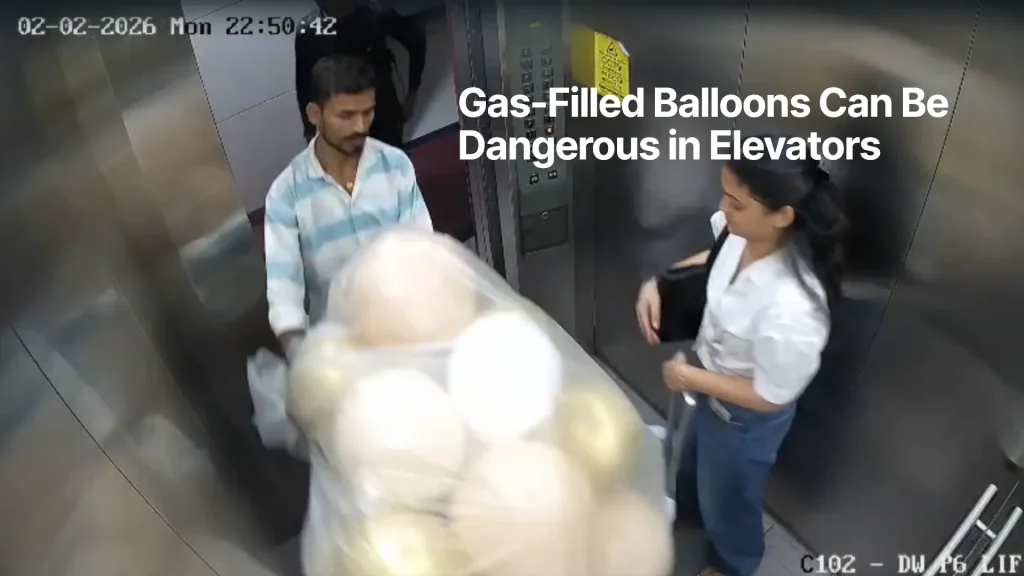
Recently, a serious incident highlighted this danger in Mumbai. A balloon explosion occurred inside a building lift at Amol Tower in Goregaon (West) on Monday night, injuring a 21-year-old student and a balloon delivery man. The moment was captured on CCTV and widely reported in the news.
While social media forwards often circulate such videos without full context, this case was officially confirmed and the risk behind it is very real and well-documented.
The hidden issue: hydrogen vs helium
Not all balloons are the same. Many balloons sold by roadside vendors are filled with hydrogen, not helium. Hydrogen is significantly cheaper, but it is also highly flammable. Helium, on the other hand, is an inert gas and does not burn.
The problem is that hydrogen-filled and helium-filled balloons look identical. Most buyers have no way of knowing which gas has been used.
Why elevators are especially risky
Elevators are enclosed, poorly ventilated spaces that contain electrical wiring, switches, and moving components. Hydrogen gas is lighter than air and rises, allowing it to collect near the ceiling. In such conditions, even a small spark, including static electricity can trigger ignition.
When this happens in a confined space like a lift cabin, the result can be a sudden flash fire or blast, causing serious injuries, exactly what occurred in the Goregaon incident.
A preventable risk
What makes this issue particularly concerning is how easy it is to avoid:
- Do not carry gas-filled balloons into elevators
- Use staircases when transporting balloons
- Prefer air-filled decorations for events in residential and commercial buildings
- Display basic safety notices in housing societies, schools, and malls
These small steps can significantly reduce risk without disrupting daily life.
Awareness without panic
It is important to approach this topic responsibly. Sharing unverified incident details can create unnecessary fear, but ignoring the risk altogether can be dangerous. The focus should remain on practical, science-based safety awareness.
Many accidents happen simply because people do not know better. Clear information, shared calmly, can prevent injuries and save lives.
Final Thought
At Utopias, we believe that safety begins with awareness, especially in the everyday spaces we often take for granted. Our work as elevator and lift consultants involves understanding how people actually use buildings, not just how systems are designed. Many safety issues arise from simple oversights rather than technical failures. By encouraging awareness around lift usage and everyday practices, residential and commercial spaces can become safer through informed choices rather than fear or restriction.
Stay alert.
Stay responsible.
And remember, lift safety begins with an audit.